
What is Pembrolizumab?
Pembrolizumab (pronounced pem-broe-LIZ-oo-mab) is an anticancer medication that helps immune system to fight tumors.
Unlike conventional chemotherapy, which directly destroys cancer, pembrolizumab helps immune T-cells to identify tumor cells and let immune system do the job of killing the malignancy. So it is more of an “enhancer” or “enabler” of the immune system, then traditional chemotherapeutic agent.
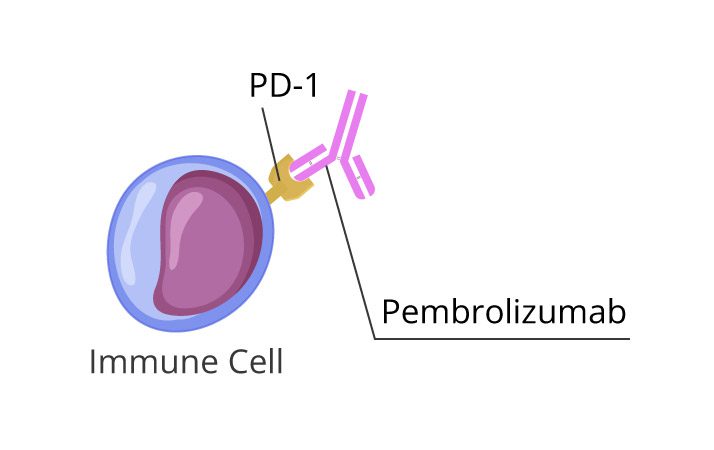
Pembrolizumab belongs to the class of PD-1 inhibitors within a broader group called immunotherapy – medications that interact with your immune system to treat various diseases and disorders.
What Pembrolizumab is Used For
Whether pembrolizumab would be effective depends on a type of the cancers. Your cancer specialist (oncologist) will conduct necessary tests to ensure pembrolizumab is the right choice for your situation.
Below are the cancer types for which pembrolizumab may be indicated.
Melanoma (skin cancer)
Doctors usually precribe it for melanoma that cannot be surgically removed or has spread to other parts of the body (metastatic melanoma).
Oncologist might try it after surgery for certain stages of melanoma (Stage IIB, IIC, or III) to prevent relapse (when cancer returns).
Non-Small Cell Lung Cancer
Pertulizumab is usefull for the specific type of lung cancer called non-small cell lung cancer. Doctors might prescribe it as a standalone cancer treatment, but usually it goes along with other anti-cancer drugs.
Head and Neck Squamous Cell Carcinoma
Can be an initial treatment for head and neck cancer (HNC) at advanced stages and presents a significant challange for surgical removal. Doctor might also prescribe it for HNC that has relapsed (came back) or spread to the other organs.
Classical Hodgkin Lymphoma
Approved for adults and children with Hodgkin Lymphoma (HL), in following two scenarios:
- Lymphoma has not responded to treatment (refractory);
- HL Cancer came back(relapsed) after trying two or more different treatment regimens;
- In children for the refractory Hodgkin Lymphoma after one or more prior lines of treatment has failed
- For relalps og HC in children after first line of treatment has failed
Primary Mediastinal Large B-cell Lymphoma
If two or more prior lines of therapy fail, oncologists might try pertulizumab for cases of refractory B-cell lymphoma.
Bladder and Urinary Tract Cancer
Doctors prescribe pertulizumab for advanced or challenging cases of Urinary truct cancers:
- For patients who do not tolerate specific anti-cancer agents, like cisplatin;
- If cancer has spread to other organs;
- For advaced cases, when the tumor poses a challange for surgical removal.
Stomach (gastric) Cancer
Used in combination with specific chemotherapy as a first-line treatment for specific cases of stomach cancer:
- locally advanced gastric tumors that cannot be removed by surgery;
- gastric or gastroesophageal junction (GEJ) cancers, that have spread to other organs and have specific HER-2 receptor on the surface of their cells.
Esophageal Cancer
Oncologist may try it to treat locally advanced or metastatic cancer of the esophagus or GEJ.
Cervical Cancer
Doctors prescribe it for cervical cancer that has returned or spread, expresses PD-L1, and has progressed during or after chemotherapy.
Onclogists use it as a first line for persistent, recurrent, or metastatic cervical cancer when combined with chemotherapy (with or without bevacizumab);
Liver Cancer
Onclogist might prescribe it for patients who previously took sorafenib.
Merkel Cell Skin Cancer
Approved for adults and children with Merkel cell carcinoma (MCC) for challenging cases:
- MMC has returned;
- Cancer has spread to other organs.
Kidney Cancer
Oncologists would try it as first line for advanced kidney cancer in combination with either axitinib or lenvatinib. Some doctors would also use pertolizumab for replases of kidney cancer or metastatic cases.
Uterine (endometrial) Cancer
Indicated for advanced endometrial cancer that cannot be cured by surgery or radiation, where it may be given alone or in combination with lenvatinib.
Cutaneous Squamous Cell Carcinoma
Doctors might try it for this type of skin cancer for relapsing or metastatic cases.
Triple-Negative Breast Cancer
Some advanced cases of breats cancer might benefit from pembrolizumab treatment.
How is Pembrolizumab Given?
Pembrolizumab is administered exclusively by trained healthcare professionals in specialized clinic or hospital.
Here some key features:
- The drug is administrated via IV line (in the veins);
- Infusion is around 30 minutes to complete;
- Your doctor would probably offer you a schedule tailored to the your specific needs. The most common one is either once every 3 weeks or once every 6 weeks;
- Your medical team would check up on you regularly during the drip to monitor for potential side effects.
How Does Pembrolizumab Work?
Structurally, pembrolizumab is a monoclonal antibody, large Y-shaped protein structure, that can bind another protein with high affinity and specificity.
Pembrolizumab binds PD-1 receptors on the surface of immune cells called T-cells, preventing its interaction with PDL-1 of a cancer cell.
Role of PD-1
When the PD-1 protein on a T-cell connects with PD-L1 or PD-L2 on a cancer cell, it signals the T-cell to switch off or ignore the cancer cell. This interaction allows cancers to evade immune attack and survive.
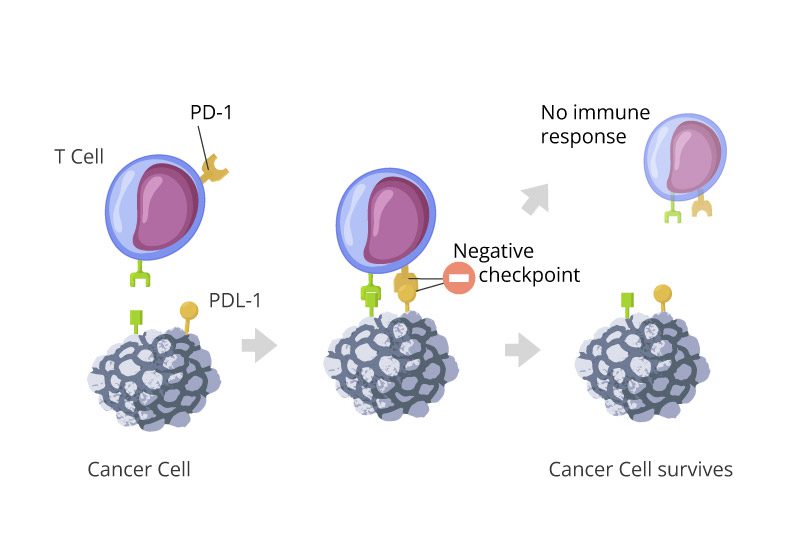
Pembrolizumab prevents PDL-1 from linking to PD-1
Pembrolizumab is specifically engineered to attach to and block the PD-1 protein located on the T-cells. By physically obstructing this connection point, it prevents PD-L1 and PD-L2 from linking to PD-1 and activate their escape mechanism.
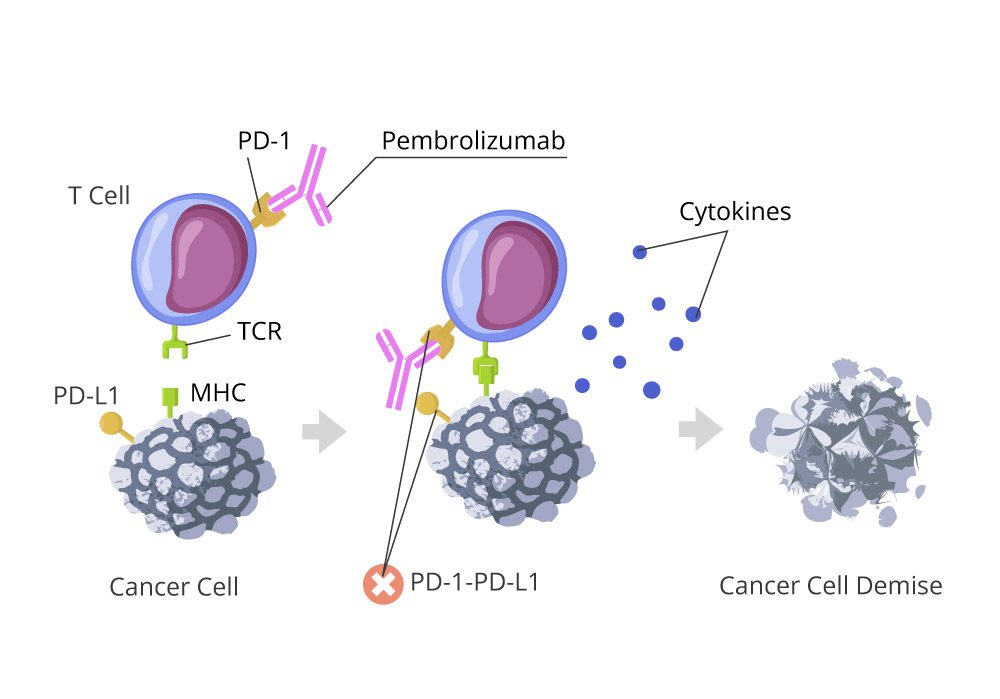
Without PD-1 – PD-L1 signal T-cell identifies tumor as a foreign structure and does the rest of the job destroying the cancer cell.
Side Effects of Pembrolizumab
Common Side Effects of Pembrolizumab
Common side effects include:
- fatigue or muscle weakness;
- muscle or joint pain;
- rash or blistering;
- itchy skin;
- decreased appetite;
- nausea, and diarrhea.
Less Common but More Serious Side Effects
Because pembrolizumab boosts your immune system’s activity, it might also cause collateral damage to healthy organs and tissues, which might be mistakenly ttacked by immune system.
These side affects are inlammatory in their nature, range from mild asymptomatic to severe (please, read “when to seek medical attention”) and usually limited to one organ (organ-specific).
Scientists call them immune-related adverse events (irAEs) and they are a feature for a broader group of immunetherapeutic agents.
When to Seek Immediate Medical Attention?
Pembrolizumab and Organ-Specific Inflammation
Your immune system could potentially target various organs. Watch for these signs:
- Lungs (Pneumonitis). Symptoms include a new or worsening cough, chest pain, or shortness of breath, requiring prompt medical evaluation;
- Large Intestines (Colitis). Signs are diarrhea (which might be severe, watery, or more frequent than usual), stools containing blood or mucus, black and tarry stools, or significant stomach pain or tenderness; Do not attempt to treat diarrhea yourself without consulting your doctor;
- Liver (Hepatitis). Look for yellowing of the skin or the whites of your eyes (jaundice), dark urine resembling tea, nausea or vomiting, pain in the upper right part of your abdomen, or bruising or bleeding more easily than normal; Unusual fatigue can also be a sign;
- Kidneys (Nephritis). Symptoms involve changes in urination frequency or amount, blood in the urine, swelling, particularly in the ankles, or loss of appetite;
- Heart (Myocarditis). Be alert for chest pain, shortness of breath, irregular heartbeats or palpitations, significant fatigue, or swelling in your ankles or legs;
- Brain or Nerves (Encephalitis, Meningitis, Neuropathies, Myasthenia Gravis). Watch for headache, fever, confusion, excessive sleepiness, memory issues, seizures, a stiff neck, severe muscle weakness (like drooping eyelids, difficulty swallowing), numbness or tingling sensations, vision changes (double vision), or hallucinations;
- Eyes (Uveitis, Iritis). Report any changes in your vision, blurry vision, eye pain, or eye redness;
- Myositis or Arthritis. Let your doctor know about severe or persistent muscle pain or weakness, or joint pain, stiffness, or swelling. It might be a signs of inflammation if joints (arthritis) or muscles (myositis).
Endocrine System Complications of Pembrolizumab
Pembrolizumab can affect glands that produce hormones:
- Thyroid gland. Unusual tiredness or lack of energy, changes in weight (gain or loss), feeling excessively cold or hot, rapid heartbeat, increased sweating are common signs of thyroid imbalance.
- Pituitary gland. Pituitary is a small gland in your brain that controls how other gland work. The symptoms might vary from low sex drive and infertility to palpitation and heat intolerance.
- Adrenal glands. Muscle wasting and weight loss, feeling dizzy or fainting, low blood pressure might indicate you have a deficiency of one of adrenal hormone. Please, contact your medical team if you expirience some of the symptoms.
- Pancreas (diabetes). Muscle weakness, increased thirst or hunger, frequent urination are synmptoms to watch for.
Skin Complications of Pembrolizumab
Skin reactions like itchy skin or blistering are quite common.
Check your skin regularly while taking pembrolizumab for the signs of more serious skin complications:
- peeling skin;
- painful sores or ulcers, especially if they occur in the mouth, nose, throat, or genital area;
- Painful redness of teh skin and rapisly spreading blisters toghther with fever might indicate Stevens-Johnson syndrome (SJS) or toxic epidermal necrolysis (TEN).
Both SJS and TEN are rare but life threatening complicatiosn and requre immidiate medical attention.
Infusion Reactions
Reactions can occur during or shortly after the infusion of pembrolizumab. Symptoms might include chills or shaking, itching, rash, flushing, shortness of breath or wheezing, dizziness, fever, or feeling faint; Your healthcare team will monitor you closely for these;
Other Serious Complications
Less common but potentially severe issues include:
- Blood Disorders: Your immune system might attack blood cells, leading to conditions like hemolytic anemia (destruction of red blood cells) or aplastic anemia (body doesn’t produce enough new blood cells), or another rare condition called hemophagocytic lymphohistiocytosis (HLH), involving excessive immune activation; Symptoms can include fatigue, pale skin, shortness of breath, fever, bruising, or swollen lymph nodes;
- Stem Cell Transplant Complications: If you have received, or plan to receive, an allogeneic stem cell transplant (using donor cells), pembrolizumab given before or after the transplant can increase the risk of serious complications like graft-versus-host disease (GVHD), where the donor cells attack your body, which can be life-threatening; Ensure your transplant team and oncologist are aware of all treatments received;
Remember: This is not a complete list of all possible side effects; Always communicate openly with your healthcare team about any symptoms you experience, no matter how minor they seem;
Before Taking Pembrolizumab
To ensure pembrolizumab is administered safely and effectively, a thorough discussion of your medical background with your doctor is crucial before initiating treatment; It is vital to inform your doctor if you:
- Suffer from any immune system disorders, such as Crohn’s disease, ulcerative colitis, lupus, or rheumatoid arthritis;
- Have undergone an organ transplant, particularly an allogeneic stem cell transplant (using cells from a donor);
- Are scheduled to receive, or have previously received, an allogeneic stem cell transplant;
- Have received radiation therapy to your chest area in the past;
- Experience any lung or breathing difficulties;
- Have pre-existing liver or kidney conditions;
- Have issues with your thyroid, pituitary gland, adrenal glands, or pancreas, including diabetes;
- Possess any other significant medical conditions;
- Are pregnant, suspect you might be pregnant, or are planning pregnancy; Pembrolizumab poses risks to an unborn baby, so females capable of becoming pregnant must utilize effective contraception throughout the treatment period and for a minimum of 4 months following the final dose;
- Are breastfeeding or intend to breastfeed; It remains unknown whether pembrolizumab passes into breast milk, therefore breastfeeding should be avoided during treatment and for 4 months after the last dose due to potential risks to the infant;
- Have any known allergies, especially to pembrolizumab or its components;
- Are currently taking any other medications, encompassing prescription drugs, over-the-counter medicines, vitamins, herbal remedies, or supplements;
What Should I Avoid While Receiving Pembrolizumab?
Based on safety guidelines for pembrolizumab and similar immunotherapy agents:
- Avoid Becoming Pregnant. Due to the potential harm to a developing fetus, females who are able to conceive must use reliable birth control during the entire course of treatment and continue for at least 4 months after the final infusion.
- Avoid Breastfeeding. Breastfeeding is not recommended during treatment and for 4 months following the last dose, owing to the potential risk for adverse effects in the nursing child.
- Avoid Self-Managing Side Effects. Do not attempt to treat potential side effects like diarrhea, rash, or cough independently without first consulting your healthcare provider; It’s essential they evaluate the cause, particularly to rule out serious immune-related reactions requiring specific medical management.
Always adhere to the specific instructions and precautions provided by your healthcare team regarding activities and lifestyle during your treatment period.
Brand Name
Pembrolizumab is marketed globally under the brand name Keytruda®;
Similar Medications to Pembrolizumab
Pembrolizumab is part of a class of cancer drugs known as immune checkpoint inhibitors, specifically targeting the PD-1/PD-L1 pathway; Other medications function through similar mechanisms, targeting PD-1, PD-L1, or the related CTLA-4 pathway, to enhance the immune response against cancer; These include:
- Other PD-1 Inhibitors:
- PD-L1 Inhibitors:
- Atezolizumab (Tecentriq®);
- Durvalumab (Imfinzi®);
- Avelumab (Bavencio®);
- CTLA-4 Inhibitors:
- Ipilimumab (Yervoy®);
- Tremelimumab (Imjudo®);
Although these drugs operate similarly, their approved uses (indications), dosing schedules, and specific side effect profiles can differ; Your oncologist will determine the most suitable immunotherapy agent based on your unique cancer type and overall health situation;